Seeing a raccoon scurry across your driveway or noticing a pair of glowing yellow eyes near your trash cans at night is a familiar experience for most Indiana residents. These masked mammals are highly adaptable, thriving across the state. But their presence often leaves homeowners wondering what brings them to their yards in the first place.
The short answer is food. Raccoons are ultimate opportunists. They have an incredibly diverse diet that allows them to survive in almost any environment, from the bustling suburbs of Indianapolis to the quiet, forested hills of southern Indiana. Because they are omnivores, they happily consume both plants and animals, shifting their focus based on what is most easily available.
Knowing exactly what these animals eat is crucial for maintaining a peaceful home. Hungry wildlife can cause significant property damage, spread dangerous diseases, and create stressful encounters for your family and pets. By learning about their foraging habits, you can take proactive steps to make your property less inviting to these midnight visitors.
What Do Raccoons Eat in Urban and Suburban Areas of Indiana?
As human development expands, raccoons have quickly learned that residential neighborhoods offer a massive, reliable buffet. They are highly intelligent and have dexterous front paws that make accessing human-provided food sources relatively easy.
Garbage Cans and Food Scraps
To a raccoon, a standard trash can is a treasure chest. They will gladly feast on leftover pizza crusts, discarded meat scraps, and even sweet treats. If a trash can is unsecured, they will tip it over and pry off the lid. They are even known to chew through bungee cords to reach the food inside.
Pet Food Left Outdoors
Leaving dog or cat food outside overnight is an open invitation for local wildlife. Raccoons are heavily drawn to the high protein and fat content in commercial pet foods. Unfortunately, sharing food bowls can lead to severe health risks, as raccoons can transmit diseases like rabies, canine distemper, and raccoon roundworm to your pets.
Garden Produce and Fruit Trees
If you take pride in your backyard garden, a raccoon can quickly become your worst enemy. They have a strong preference for sweet crops like corn and grapes, often plucking them right before you are ready to harvest. They will also forage for fallen fruit around apple and pear trees. Furthermore, they love to eat beetle grubs hiding in your lawn. They will literally roll back freshly laid sod to reach these insects, leaving your yard looking like it was heavily tilled.
Raccoons and Bird Feeders
Bird seed is packed with calories, making it a highly desirable snack for a passing raccoon. Because they are excellent climbers, they can easily scale poles and trees to empty your bird feeders under the cover of darkness.
What Do Raccoons Eat in Rural Indiana?
Away from human settlements, raccoons return to their natural foraging habits. Northeastern Indiana, with its glacial lakes, and the farmland of central Indiana offer prime real estate for these animals to hunt and gather.
Natural Food Sources
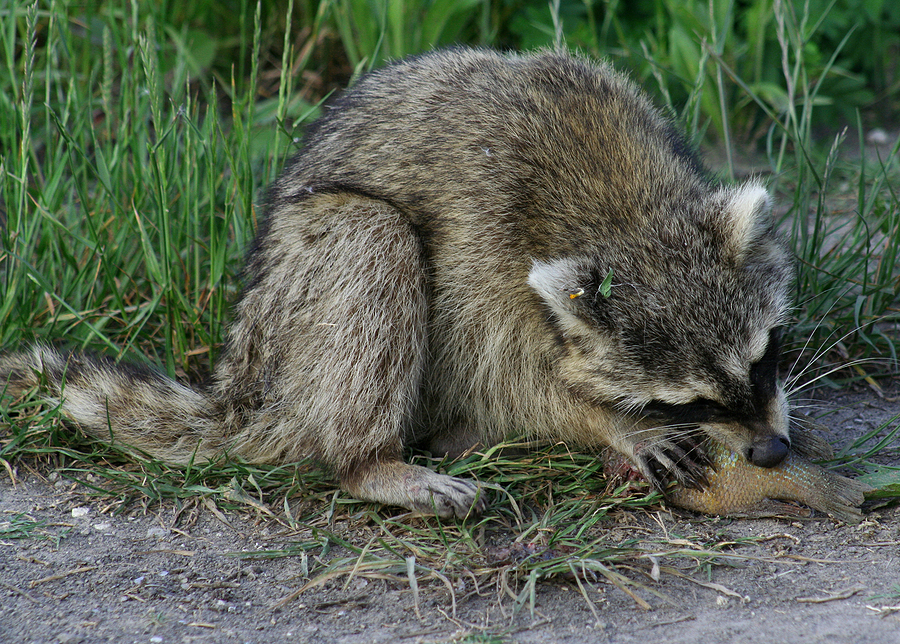
In the wild, a raccoon’s diet is heavily influenced by proximity to water. They frequently hunt along the shores of creeks and ponds, feeling for aquatic life like crayfish, frogs, small fish, snails, and clams. Away from the water, they hunt insects and small mammals. They are also notorious for raiding nests to eat bird and turtle eggs. On the plant side, their diet relies heavily on wild fruits, berries, beechnuts, and acorns.
Seasonal Variations in Diet
A raccoon’s dietary needs change drastically as the weather turns cold. During the spring and summer, a raccoon typically eats between one-half to a full pound of food per day. As the harsh Midwest winter approaches, they enter a state of hyperphagia. During this time, they can consume up to five pounds of food daily to build up thick fat reserves. This excess weight sustains them when they stay huddled in their dens during periods of extreme cold and heavy snow.
The Opportunistic Nature of Indiana Raccoons
Adaptability is the key to the raccoon’s survival. They do not have a specialized diet, which means they can quickly pivot to a new food source if their primary option disappears.
One fascinating aspect of their foraging behavior is how they use their paws. You might have heard that raccoons like to “wash” their food. In reality, a raccoon’s paws are packed with sensitive nerve endings. When they wet their paws, it enhances their sense of touch. They knead and tear at their food in the water to feel for debris or parts that should not be eaten. If water is not nearby, they will simply eat their meal without this ritual.
How to Prevent Raccoon Foraging on Your Property
You can protect your home by eliminating the food sources that draw raccoons in. Implementing a few simple changes can make your yard far less appealing to these hungry foragers.
Securing Trash Cans
Invest in heavy-duty garbage cans with locking lids. If your cans do not lock, keep them inside a secure garage or shed until the morning of trash collection.
Protecting Gardens and Pet Food
Bring all pet food and water dishes inside before the sun goes down. To protect a garden, consider stringing a single strand of electric fence about eight inches above the ground around the perimeter. For fruit trees, wrapping a three-foot-tall section of metal flashing around the trunk can prevent them from climbing up to the branches.
Excluding Raccoons from Attics and Outbuildings
When raccoons find a reliable food source, they look for a warm place to build a den nearby. Trim overhanging tree limbs to prevent them from accessing your roof. Cap your chimneys and ensure there are no small entry points leading into your attic, garage, or shed. Make sure pet doors are locked at night to prevent accidental home invasions.
Professional Raccoon Removal and Control
If raccoons have already established a presence on your property, it is safest to call a professional raccoon control service. Trying to trap or handle wildlife yourself can result in severe injuries or exposure to zoonotic diseases.
Frequently Asked Questions About Raccoon Diets
Are raccoons dangerous to pets?
Yes, raccoons pose a significant threat to domestic pets. They carry several serious zoonotic diseases. In Indiana, raccoons are a high-risk rabies species. They also shed Baylisascaris procyonis (raccoon roundworm) eggs in their feces, which is highly dangerous to both dogs and humans. Additionally, cornered raccoons can be aggressive and cause severe injuries with their sharp claws and teeth.
Do raccoons eat chickens?
Raccoons are skilled predators and pose a massive threat to backyard poultry flocks. They will reach through wide-gauge chicken wire or tear off hardware cloth to grab a chicken. If you keep chickens, ensure your coop is fortified with heavy-duty locks and tightly woven wire mesh.
How much do raccoons eat?
On an average day, a raccoon eats about half a pound to one full pound of food. However, as winter approaches, their caloric needs skyrocket. In late autumn, they can consume up to five pounds of food per day to build up the fat reserves necessary to survive the freezing Indiana winter.
Keep Your Property Safe and Secure
Dealing with hungry wildlife can be a stressful and overwhelming experience. Raccoons are persistent, highly intelligent, and capable of causing thousands of dollars in property damage while searching for their next meal. By securing your trash, protecting your gardens, and keeping pet food indoors, you take the first vital steps toward keeping your home wildlife-free.
If you are dealing with a persistent raccoon problem, do not wait for the damage to get worse. Get expert help to resolve the issue safely and humanely. If you need professional raccoon removal and control service in Indianapolis, Indiana, request a free quote or inspection, today.
Related Post: Identifying and Eliminating What Attracts Raccoons to Your Property